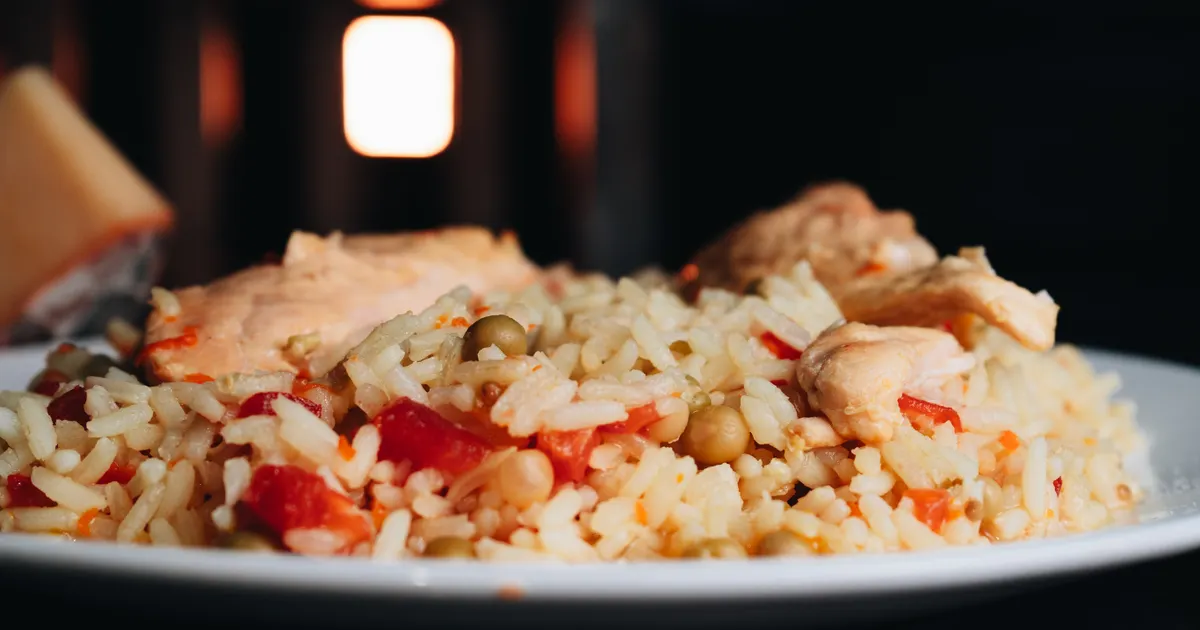
Sports Nutrition for Normal People: What Actually Matters
 By Paul Butler · Online Coach & Personal Trainer
Sports nutrition is the science of feeding athletes. Which is lovely, if you are one. The only sport I reliably compete in is getting the lid off the protein tub.
Most sports nutrition advice was written for someone who trains twice a day and naps in between. You train at half six, after work, if the meeting finishes on time. So here is sports nutrition for normal people: the five things that genuinely move the needle when you lift three times a week, what the evidence says about each, and the long list of things you can safely ignore.
What is sports nutrition, and do you actually need it?
Sports nutrition is eating arranged around training: enough fuel to do the session, enough protein to recover from it, and enough water to not fall over. Athletes need a precise version of that because their margins are tiny. You need the basic version, because your margins are enormous. Getting the five things below roughly right beats getting the fiftieth thing exactly right.
| Priority | What | How much, for most people | Why it matters |
|---|---|---|---|
| 1 | Total food | Matched to the goal: a bit less to lose fat, a bit more to build | Decides whether you lose, gain or stay put. Nothing below overrides it |
| 2 | Protein | About 1.6 g per kilo of bodyweight a day | Recovery, muscle, and it keeps you full |
| 3 | Carbs near training | A normal meal two to three hours before | Energy for the session. No powder required |
| 4 | Water | Enough that you are not thirsty, more if it is hot or long | Everything works worse when you are dry |
| 5 | Creatine | 3 to 5 g a day, any time, optional | The one supplement with decades of evidence behind it |
Notice what is not on the list. No timing windows, no pre-workout, no fat burners, no electrolyte sachets for a forty minute session in a heated gym. If you are hitting the five, you are doing sports nutrition. If you are not, no sachet fixes it.
How much protein do you actually need?

This is the number people argue about most, and it has been measured properly. A 2018 review pooled forty nine studies, nearly two thousand people, all lifting weights, and looked at what extra protein did for muscle. It helped, up to a point, and then it stopped.
"Protein supplementation beyond total protein intakes of 1.62 g/kg/day resulted in no further RET-induced gains in fat-free mass."
RET is resistance exercise training, which is lifting. So for an 80 kilo person that is roughly 130 grams of protein a day, from food, powder, whatever you like. Beyond that, more protein does nothing extra for muscle. It is not harmful for a healthy person, it is just expensive. If you are in a calorie deficit and want to keep muscle while you lose fat, a bit higher is sensible, and that post covers why.
The honest problem for most people is not that they need more than 1.6. It is that they are currently on 0.8 and do not know it, because "protein" in their head means the chicken breast at dinner and nothing before that.
The supplement question
People love buying supplements, mostly because swallowing capsules feels suspiciously like making progress. I have seen people spend nearly three hundred pounds on powders, pills and potions before admitting they sleep five hours a night, drink almost no water and survive on coffee and hope. It is a bit like fitting carbon fibre spoilers to a Ford Fiesta that has run out of petrol. Technically you have upgraded something. Just not the bit that matters.
I am not against supplements. Some are genuinely useful. Protein powder? Great, it is just food that dissolves. Creatine? Excellent, cheap, and the most studied supplement in existence. Vitamin D if you barely see daylight? Makes sense, this is Britain. That is the list. Supplements are the last five per cent, and if sleep, food, water and steps are not sorted, the five per cent is not available to you yet.
What to eat before and after the gym
Before: a normal meal two to three hours out. If you train first thing, something small with some carbs in it, or nothing at all if you prefer, because that is genuinely down to preference and the session is short. After: your next proper meal, with protein in it, within a couple of hours. That is it.
The panic about a narrow window after training, where muscle supposedly evaporates if you do not drink a shake in the car park, is not how it works. The total you eat across the day matters far more than the clock, which is the same boring truth as the carbs at night question. A shake after training is fine. It is a convenience, not a rescue.
When this is not enough
If you are actually competing, training twice a day, or doing endurance events that run past a couple of hours, you have crossed into the athlete version and the margins have shrunk. A sports dietitian is the right person, not a blog. And if you have a medical condition, especially anything involving your kidneys, talk to your GP before adding creatine or pushing protein up. This is general information, not medical advice.
Frequently asked questions
Do I need a protein shake?
No. A shake is protein that happens to be a drink, and it counts exactly the same as protein on a plate. It is worth having if it is the easy way to hit your number on a busy day. It is not worth having because a tub told you to.
Should I take creatine if I am not an athlete?
It is optional, but it is the one supplement I would put money on. Three to five grams a day, taken any time, no loading phase needed, it just takes a few weeks to build up. It helps you get a rep or two more, which adds up over months. Check with your GP first if you have any kidney issues.
What should I eat before a morning gym session?
Something small with carbs if you want it: a banana, a slice of toast, a yoghurt. Or nothing, if you train fine on an empty stomach. For a forty minute session neither choice changes the result. Eat properly afterwards and get on with your day.
Are sports drinks worth it?
For a normal gym session, no. Water does the job. Sports drinks earn their place in long, hot, sweaty sessions where you are losing a lot of fluid and need the sugar as fuel. For most people they are just calories with a sporty label.
DM me MACROS on Instagram @paulbutler.coach and I will send you your calorie and protein targets. That is priorities one and two on the list above, worked out for you.
If you want the food built round your training week as well, see how online coaching works, or book a free 15-minute call.
This article is general information, not medical advice. If you have a kidney condition or any condition your GP is managing, talk to them before changing protein intake or adding supplements.
More honest guides on fat loss, nutrition and training
The protein ceiling is Morton et al. 2018, British Journal of Sports Medicine 52(6), a meta-analysis of 49 studies and 1,863 participants, linked in the text. The creatine dose is the International Society of Sports Nutrition position stand, Kreider et al. 2017, linked in the FAQ. Images from Pexels (free to use): Andres Alaniz, Alesia Kozik, Anete Lusina.
