How to Lose Belly Fat: What Works and What Doesn't
 By Paul Butler · Online Coach & Personal Trainer
I have some bad news about doing a hundred crunches a night to shift your belly. For that particular job, it is mostly a waist of time. (I did warn you there would be puns.)
So how do you lose belly fat? You can't pick where your body loses fat from, so the answer is to lose fat overall, by eating a bit less than you burn, and to exercise regularly. The second part matters more than the scales suggest, because exercise shrinks the deep fat around your organs even when your weight barely moves.
Can you lose belly fat by doing crunches?
Not on their own. In a study where people did seven different stomach exercises, five days a week for six weeks, their belly fat, waist size and body fat didn't change compared with people who did nothing. Their stomach muscles did get stronger. You just can't see strong muscles under fat, which is the annoying bit.
"Six weeks of abdominal exercise training alone was not sufficient to reduce abdominal subcutaneous fat and other measures of body composition."
It is a small study, 24 people, and six weeks is not long. But it fits how fat loss actually works. When your body needs energy it draws on fat stores from all over, in an order mostly decided by your genes and hormones, not by which muscle you have just worked.
There are two kinds of belly fat
The fat you can pinch is called subcutaneous fat, which just means "under the skin". It is the fat most people want gone because it is the fat they can see.
Underneath your stomach muscles, packed around your organs, is visceral fat. You can't pinch it and you can't see it, but it is the one that matters more for your health. NICE, the body that sets health guidance in England, says extra fat around the middle raises the risk of type 2 diabetes and heart disease.
What actually shifts belly fat
The best evidence here is a review that pulled together 117 studies and nearly 5,000 people, comparing exercise with dieting for that deep visceral fat.
Both worked. Dieting took more weight off the scales. Exercise tended to take more visceral fat off, although that difference was a trend rather than a firm result. The finding that stood out was this one: in studies where people's weight barely changed at all, exercise still cut visceral fat by about 6%, while dieting alone managed about 1% (Verheggen et al., 2016).
In plain English, the scales can tell you nothing is happening while the fat that matters most for your health is going. That is a horrible reason to give up, so don't let the scales be your only measure.
| Approach | What it does for belly fat | Worth doing? |
|---|---|---|
| Crunches and sit-ups | Stronger stomach muscles, no measurable fat loss on their own | Yes, for strength. Not for fat |
| Eating a little less than you burn | The biggest drop in overall weight, and it reduces visceral fat too | Yes, this is the main lever |
| Regular exercise of any kind | Reduces visceral fat, even when your weight hardly changes | Yes, and don't judge it by the scales |
| Measuring your waist | Shows changes the scales miss | Yes, once a month is plenty |
Measure your waist, not just your weight
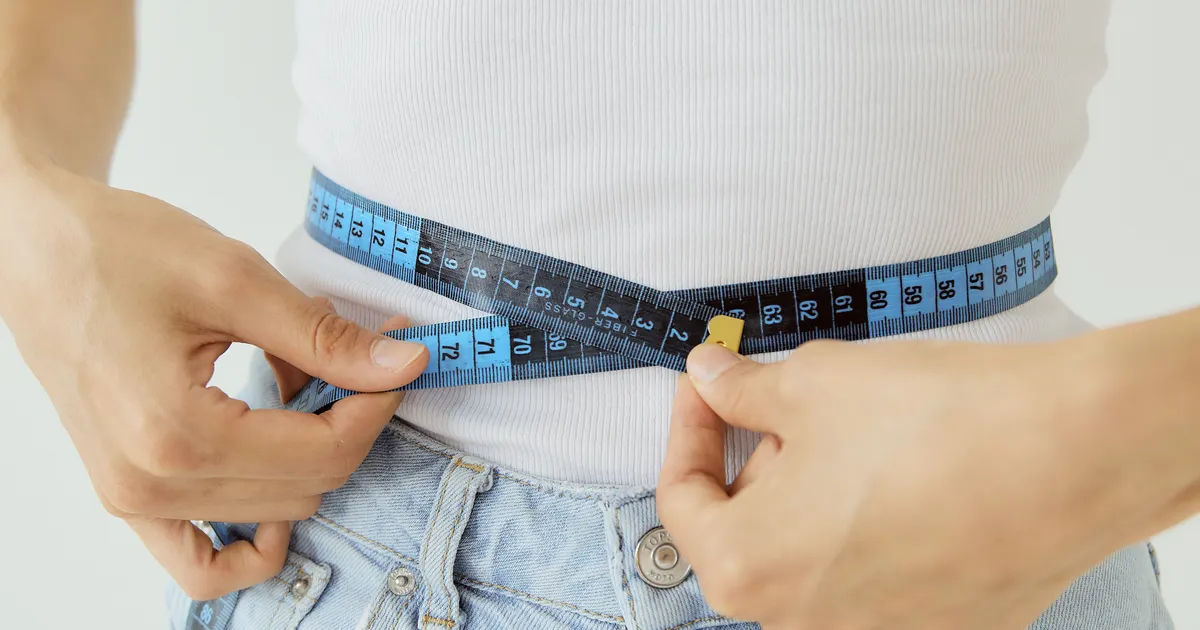
The NHS keeps this simple: "You should try to keep your waist size to less than half your height." So if you are 170cm tall, you are aiming for a waist under 85cm. You can check yours with the NHS waist to height calculator, which also shows you how to measure it properly.
Do it once a month, same time of day, same place on your body. Weekly is too often. Bloating, a big meal or a salty takeaway can all add a centimetre or two that has nothing to do with fat.
What I would actually do
None of this is exciting. Fat loss is simple, but it isn't easy.
- Eat a little less than you burn. Not a crash diet, a small gap you can keep up. If you are already trying and nothing is moving, this post on why the scales aren't moving covers the usual culprits.
- Get your protein up. Of protein, carbohydrate and fat, protein is the most filling, which makes eating less a lot less miserable. If you are constantly hungry, start there.
- Exercise in a way you will keep doing. Walking, lifting, cycling, whatever. The evidence above came from all sorts of exercise, so the best kind is the one you will still be doing in March.
- Lift something twice a week. Muscle keeps you strong while you lose fat, and stops you just becoming a smaller, weaker version of yourself.
- Count the drinks honestly. A few pints or glasses of wine add up faster than most people think, and they rarely make the food diary.
Why it seems harder for some people
Where your body stores fat, and where it loses it from first, is largely down to genetics and hormones. For a lot of people the belly is first on and last off, and that tends to shift with age and, for women, around the menopause. I have written about what genuinely changes after 40, and it is less about your metabolism than you would think.
If your waist is more than half your height, or your middle has grown quickly without an obvious reason, it is worth a conversation with your GP. This is general information, not medical advice.
Frequently asked questions
Can you lose belly fat in a week?
Not in any way that matters. You can lose water and bloating in a week, which is why quick fixes seem to work at first. Real fat loss takes weeks to show and months to look obvious. A steady approach you keep going for three months will beat any one-week plan.
Does walking help lose belly fat?
It helps, as part of the bigger picture. Any regular exercise counts towards reducing that deep visceral fat, and for most people walking is the easiest exercise to keep doing. It won't target your belly specifically, because nothing does.
Why is belly fat the last to go?
For many people it is the area their body stores most readily, so it tends to be the last place to slim down. That is genetics, not you doing something wrong. Keep going, and measure your waist monthly so you can see the progress the mirror is slow to show you.
Are there foods or drinks that burn belly fat?
No single food or drink targets belly fat, whatever the label on the bottle says. What helps is the overall pattern: enough protein, plenty of vegetables, fewer drinks, and eating a bit less than you burn. Boring, and it works.
DM me MACROS on Instagram @paulbutler.coach and I will send you your calorie and protein targets, worked out for your size and your week rather than pulled off a chart.
If you want the food and the training built round each other, see how online coaching works. Rather just talk it through? Book a free 15-minute call.
This is general information, not medical advice. If your waist is more than half your height, or your middle has grown quickly without an obvious reason, speak to your GP.
More honest guides on fat loss, nutrition and training
The 2011 Vispute et al. abdominal exercise trial and the 2016 Verheggen et al. review of exercise, diet and visceral fat are linked in the text, along with the NHS and NICE waist guidance. Images from Pexels (free to use): Darina Belonogova, Daniel Nouri, Andrea Piacquadio.
