
Dumbbell Workout Plan: A Full Week With One Pair of Weights
 By Paul Butler · Online Coach & Personal Trainer
Most dumbbells in this country are currently holding a door open. It is the only bit of gym kit that arrives pre-insulted and then gets treated accordingly.
So here is a dumbbell workout plan that actually gets used: six movements, three sessions a week, one pair of weights, done in about forty minutes. Nothing in it needs a bench, a rack or an app. The whole thing fits on a Post-it, which is roughly how much of your attention it deserves. The effort is the bit that matters.
What is the best dumbbell workout plan for a beginner?
The best dumbbell plan is a full body session you repeat three times a week on non-consecutive days. Six movements that cover legs, hips, push, pull, shoulders and carry. Two working sets and one hard set each. It is not exciting, and that is the point: a plan you repeat beats a plan you admire.
| Movement | What it trains | Sets and reps |
|---|---|---|
| Goblet squat | Legs, hips, midsection | 1 warm up, 2 x 8 to 12, 1 top set |
| Romanian deadlift | Hamstrings, glutes, lower back | 1 warm up, 2 x 8 to 12, 1 top set |
| Floor press | Chest, shoulders, triceps | 1 warm up, 2 x 8 to 12, 1 top set |
| Single arm row | Upper back, biceps, grip | 1 warm up, 2 x 8 to 12 each side, 1 top set |
| Overhead press | Shoulders, triceps | 1 warm up, 2 x 8 to 12, 1 top set |
| Farmer's carry | Grip, midsection, everything holding you upright | 3 walks of 30 to 40 metres |
Rest sixty to ninety seconds between sets. Monday, Wednesday, Friday is the obvious pattern, but any three days with a gap between them works. The gap is where the muscle actually gets built, so do not fill it with a fourth session out of enthusiasm.
The top set, and what "make every rep count" means
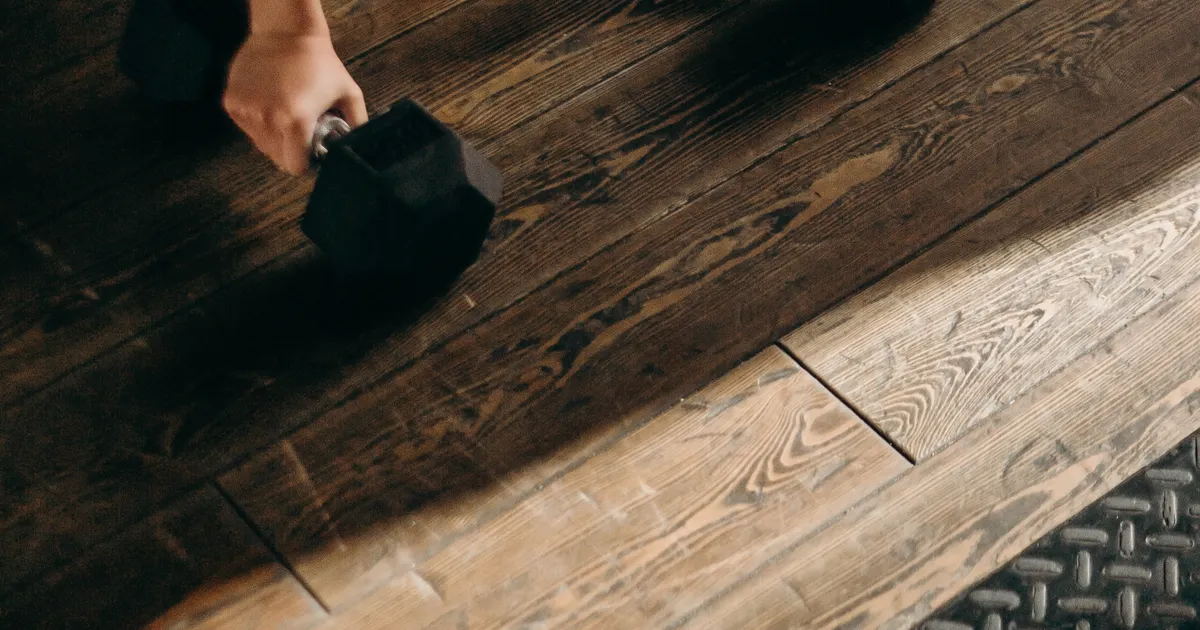
The warm up set is light, just to remind your body of the movement. The two working sets are the meat of it, at a weight where twelve reps would be genuinely hard. Then the top set: same weight, as many good reps as you can, and you stop when the next one would be ugly.
That last set is the whole plan. It does not have a rep target because a rep target lets you stop early. Do not count your reps, make every rep count. If you have never trained before, "ugly" arrives sooner than you think, and that is fine. It moves.
I have got Cystic Fibrosis, so breathing is already a part-time job, and it has given me a very unsentimental view of training. I do not waste effort on anything that does not earn its place in a session. Six movements earn their place. A seventh usually does not.
How heavy should the dumbbells be?
Lighter than you think, and heavier than you would like by the end of the set. For most beginners that is somewhere between six and twelve kilos per hand, and the honest answer is that it matters less than the fitness industry would have you believe.
There is a well known review on exactly this question. It pooled twenty one studies comparing light loads against heavy loads, with every set taken close to failure, and found that heavy weights win for pure strength but muscle grows just as well either way.
"...muscle hypertrophy can be equally achieved across a spectrum of loading ranges."
Read that carefully, because the condition matters. The light sets in those studies were taken close to failure. A light dumbbell and an easy set builds nothing. A light dumbbell and a set that ends with your arms shaking builds plenty. So if your only pair is a bit light, the fix is not a new pair. It is the top set.
How to make one pair of dumbbells last months
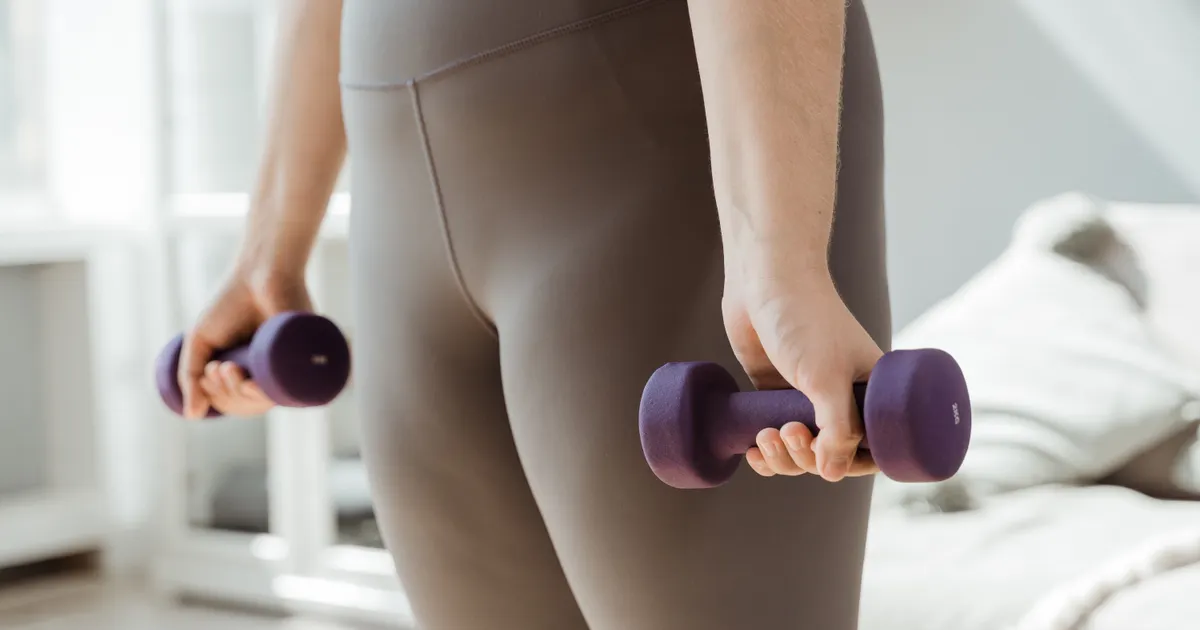
At some point twelve reps stops being hard, and you cannot pop to the shop for a heavier pair mid-session. This is the order I would use to keep the same weight working.
- More reps. Twelve becomes fifteen. Simple, and it goes further than people expect.
- Slower lowering. Three seconds down on every rep. The same dumbbell feels like a different dumbbell.
- A pause. One full second at the bottom of the squat, the press, the row. Momentum was doing more than you thought.
- One limb at a time. Single leg Romanian deadlift, single arm press. Half the weight per side is suddenly plenty.
- Less rest. Ninety seconds becomes sixty. Last resort, because it quietly turns lifting into cardio.
Only when all of that stops working do you need heavier dumbbells. Most people buy the heavier pair first and skip the list. If you are over forty and wondering whether any of this changes, it changes less than you think.
When this plan is not the answer
If you have a gym membership you are avoiding, this plan is a fine bridge but a poor destination. A rack and a cable stack will take you further, and the only reason not to use them is usually nerves, which is a different problem with a different fix.
If you have an injury, a heart condition or anything a GP is currently managing, check with them before you start. This is general information, not medical advice.
And if the honest problem is that you cannot find forty minutes three times a week, do not start with this. Start with the smallest version of a workout you will actually do, and grow it. Most people do not need a more advanced programme. They need to do the boring one they already have.
Frequently asked questions
How long should a dumbbell workout take?
Thirty five to forty five minutes, including a few minutes of warming up. If it is taking over an hour you are resting too long or scrolling between sets. If it is taking twenty minutes, the working sets are not working sets.
Do I need a bench?
No. The floor press does the job of a bench press, and the floor stops your elbows dropping too far, which is kinder on the shoulders for a beginner anyway. A bench is a nice-to-have for later, not a reason to delay.
Can I do this dumbbell plan every day?
You can, but you will get less from it. Muscle is built in the recovery between sessions, not during them. Three sessions with a day between each is the sweet spot for a beginner. On the other days, walk.
Should I add cardio to a dumbbell workout plan?
Walk on the days you are not lifting, and aim for a step count you can hit every day rather than one heroic run a week. If fat loss is the goal, steps and food do far more of the work than the session does.
DM me STARTING on Instagram @paulbutler.coach and I will send you The Starting Point: five days of the fundamentals, then a four week plan built round your real week. No cost, no catch.
Or see how online coaching works if you want someone checking the sets are actually hard. Rather just talk it through? Book a free 15-minute call.
This article is general information, not medical advice. If you have an injury, a heart condition or anything your GP is currently managing, check with them before starting a new training plan.
More honest guides on fat loss, nutrition and training
The load study is Schoenfeld, Grgic, Ogborn and Krieger 2017, Journal of Strength and Conditioning Research 31(12), a systematic review and meta-analysis of 21 studies, linked in the text. Images from Pexels (free to use): Anna Shvets, cottonbro studio, MART PRODUCTION.
