
Gymtimidation: How to Walk In Like You Belong There
 By Paul Butler · Online Coach & Personal Trainer
The gym is the only place people pay good money to go, then spend a fortnight too scared to walk into.
If that's you, sitting in the car park working out whether today's the day, I want to say two things before anything else. First, the feeling has a name now, gymtimidation, so at least your dread is officially recognised. Second, and this is the one that matters, it is not a sign that you don't belong there. It's just fear of a room you haven't learned yet. And rooms are very learnable.
So this isn't a list of ten tips you'll nod at and forget. It's a proper walkthrough of your first visit, from the car park to the changing room to that corner full of weights that half the country is quietly terrified of. By the end you'll know exactly what happens, which means there's a lot less left to be scared of.
You're not imagining it, and you're not alone
Let's kill the idea that you're being daft or dramatic. You're not. Les Mills asked over 10,000 people for their 2026 Global Fitness Report, and half of them said the weights area intimidates them. Over half of people who want to start lifting don't know where to begin. This is not a you problem. This is a nearly-everyone problem that nobody says out loud, because admitting it feels like one more thing to be embarrassed about.
It's worth saying plainly that this isn't a men's thing or a women's thing either. I coach both, and the car-park dread turns up just as often in either. If anything, women tell me about it more honestly, and men tend to walk in looking confident while feeling exactly the same. Whoever you are, you're in the majority.
Think about what that means on a practical level. In any gym you walk into, roughly half the people there have felt exactly what you're feeling. The nervous ones just hide it better once they've been going a while. You are not the odd one out. You're the honest one who hasn't learned to fake it yet.
The audience you're afraid of doesn't exist

Here's the single most freeing thing I can tell you, and it's true whether you believe it yet or not: nobody is watching you. Not the person by the mirror, not the woman on the treadmill, not the two mates chatting by the rack. They are all, every single one of them, completely wrapped up in their own set, their own reflection, their own first week back that they're equally nervous about.
The gym is the most self-conscious room in the country, which by pure maths makes it the least observant. Everyone's so busy hoping nobody's looking at them that literally nobody has any attention spare to look at you. If anyone does glance over, it's for about half a second, and the thought behind it is almost always "good on them" or, more likely, nothing at all before they go back to counting their own reps.
You are not being judged. You are being ignored, in the nicest possible way, and that is exactly what you want.
Before you go: the boring prep that kills half the fear
Most gym fear isn't fear of exercise. It's fear of not knowing what to do and being visibly lost. So we remove the not-knowing before you even set foot in there.
- Wear whatever's comfortable and covers what you want covered. A t-shirt and any trousers you can move in. Nobody is assessing your kit. The person in the head-to-toe matching outfit is not fitter than you, they've just done more laundry.
- Book an induction, or just ask for a look round. Most gyms will happily show you where everything is. It costs nothing, it's their job, and it turns a scary maze into a place you've already been once.
- Have a plan for your first session, even a tiny one. Ten minutes on a bike, a couple of machines you were shown, then home. A plan means you're never that person stood in the middle looking around, which is the exact moment everyone dreads.
- Go at a quiet time first. Mid-morning, early afternoon, mid-evening once the after-work rush clears. Peak times (weekday 7 to 9am and 5 to 7pm) are the busiest. Dodge those for your first few visits and the whole thing is calmer.
Walking in: what actually happens
Right, day one. Here's the whole thing, start to finish, so none of it can ambush you.
You scan in or show your pass at the desk. The person there has checked in thousands of nervous first-timers and will not bat an eyelid. You head to the changing room, put your stuff in a locker (bring a pound coin or a padlock, that's the only insider knowledge you need). You walk out onto the floor.
Now, this is the moment the fear was really about, so here's what to do with it: go straight to the thing you planned. A treadmill or a bike is perfect, because everyone understands walking, and it gives you five minutes to let your eyes adjust to the room and your heart rate settle. You are now Officially At The Gym. The hardest part, the walking-in part, is already behind you and it turned out to be nothing.
From there you do your two or three planned things and you leave. That's a complete, successful session. It does not need to be an hour. It does not need to hurt. Nobody's ever regretted a short first session. Plenty of people have quit after smashing themselves so hard on day one they couldn't sit on a toilet for a week.
The weights area (the bit half the country avoids)
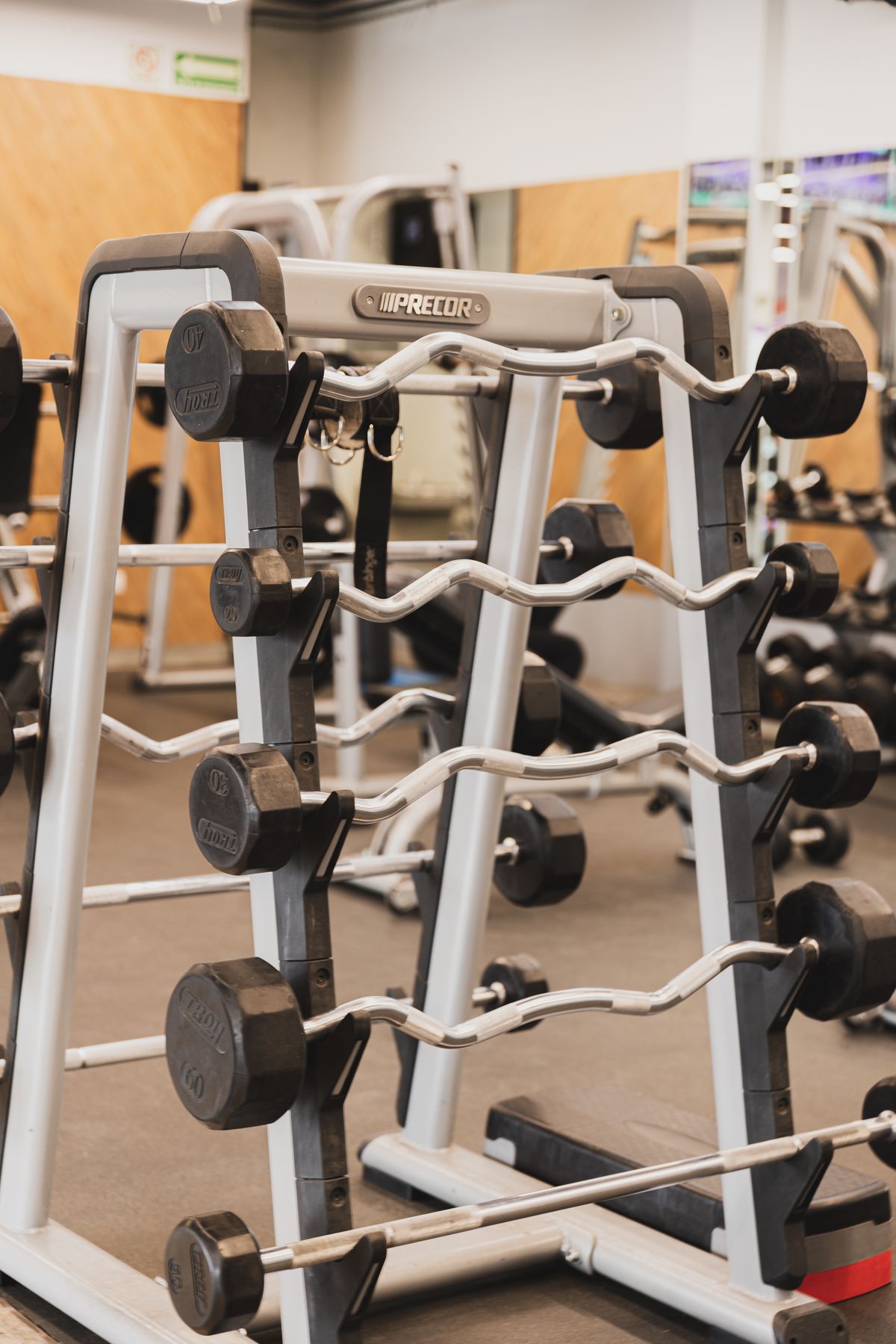
That corner with the dumbbells and the racks is where the 50% freeze up. It looks like a members-only club with rules you were never told. It isn't. It's just heavy objects and benches, and you're allowed to use any of it.
The gentlest way in is the machines. They have little pictures and instructions printed on the side, they hold you in the right position so you can't do it too wrong, and you can start on a weight so light it's almost polite. Do that for a few weeks and you'll notice something: the weights area stops looking like a lion's den and starts looking like what it is, a room full of ordinary people quietly getting on with it, most of whom felt exactly like you not long ago.
When you're ready for dumbbells, the only two things you need to know are: start lighter than your ego wants, and put them back when you're done. That's it. That's the whole secret handshake.
Gym manners, in plain English
Half the fear of a new place is worrying you'll break some unwritten rule. So here are the written ones. There are basically four:
- Put your weights back. Rack the dumbbells, strip the plates off the bar. That's the big one, and doing it marks you out as someone who knows what they're doing more than any amount of muscle.
- Wipe the bench or machine after you. There's a spray and blue roll on the wall for exactly this. Nobody wants to lie in your sweat, fair enough.
- Don't hover. If someone's using a machine, don't stand over them tapping your foot. Ask "how many sets have you got left?" or just do something else and come back. Easy.
- You can share. On busy days people "work in", meaning you take turns on a machine between each other's sets. If someone asks, it's normal, say yes. If you need to, you're allowed to ask too.
Notice what's not on that list: looking a certain way, lifting a certain amount, knowing what you're doing. None of that is required. The etiquette is about tidiness and taking turns, the stuff you learned at primary school. You've got this bit already.
When it's worth just getting help
Sometimes the fastest way past the fear is to not do it alone. Which brings us to what a personal trainer actually does, because a lot of people picture someone screaming at them like it's an army recruitment advert. That's telly. It isn't the job.
A good trainer, in person or online, shows you how the machines work so you're not guessing, writes you a simple plan so you always know what you're doing, and stands in your corner while the gym goes from terrifying to normal. For someone dealing with gymtimidation, that last part is the real value. Not the exercises. The company, and the quiet confidence of walking in next to someone who's clearly relaxed, until the day you realise you're relaxed too and don't need them there for that bit anymore.
Do you need one? No. Loads of people find their feet alone, and there's plenty on this blog to help you do exactly that. But if the car-park dread has cost you more than one membership already, paying someone to make the room feel safe is money well spent, not a failure.
Frequently asked questions
How do I get over gym anxiety as a beginner?
Go off-peak, have a simple two or three exercise plan so you're never stood there lost, and start smaller than feels impressive. Most gym anxiety is fear of not knowing what to do, so the fix is removing the not-knowing. A quick induction or a session with a trainer skips most of it in one go.
Is everyone at the gym really not looking at me?
Genuinely, yes. Everyone's focused on their own workout, their own reflection and their own nerves. Any glance your way lasts half a second and the thought behind it is usually "good on them" or nothing at all. The audience you're picturing doesn't exist.
What should I do on my very first gym visit?
Keep it short and easy. Scan in, put your things in a locker, do ten minutes on a bike or treadmill to settle, try a couple of machines you were shown, then go home. That's a complete, successful session. Day one is about proving the room is safe, not about a hard workout.
What does a personal trainer actually do for a nervous beginner?
Shows you how everything works, writes you a plan so you always have a purpose, and makes the room feel normal by being calm next to you. For gymtimidation the real value is the company and the confidence, not just the exercises. You won't need them forever, only until the place stops feeling like a test.
When are gyms least busy?
Usually mid-morning, early afternoon, and later in the evening once the after-work crowd thins out. Weekday 7 to 9am and 5 to 7pm are the busiest. For your first few visits, dodging those makes everything feel calmer and gives you more room to learn where things are.
Then it isn't another workout you're short of, it's somewhere to begin that doesn't feel like a test. The Starting Point is five days of the fundamentals that genuinely shift the needle, then a four week programme built round your life rather than an idealised version of it. No cost, no catch.
Start here, or read Why You Keep Starting Over (And Why That's Not a Character Flaw) if this isn't your first go at getting going.
This article is general information, not medical advice. If anxiety around the gym or exercise is affecting your day-to-day life, please speak to your GP. Asking for help is strength, not weakness. Images sourced from Pexels (free to use): Foad Shariyati, Julia Larson, Marcia Salido. Survey figures: Les Mills 2026 Global Fitness Report.
