
How to Get Motivated to Exercise in Winter When It's Dark
 By Paul Butler · Online Coach & Personal Trainer
The clocks went back last weekend, so it is now dark by about five o'clock and your trainers are watching you from the hallway with quiet disappointment. Winter is the season when good intentions get put on ice.
So how do you get motivated to exercise in winter? You give your plan a winter version before the weather makes the decision for you. That means an indoor option for the dark evenings, a fixed slot that doesn't depend on the forecast, and a goal of keeping the habit going until spring rather than chasing big changes.
Why is it so hard to exercise in winter?
Because most routines are built for light evenings. When it is dark, cold and wet by the time you finish work, the walk, the run or the drive to the gym all feel like a much bigger ask. That isn't a personal failing. The same winter dip turns up across a very large number of people, and the researchers who found it also pointed to the fix.
What the research says about winter and exercise
A review of 37 studies, covering nearly 292,000 people across eight countries, looked at how the seasons affect how active people are. Activity levels rose and fell with the seasons, and poor or extreme weather came up again and again as a barrier.
"Providing indoor opportunities during the cold and wet months may foster regular physical activity behaviours year round."
That conclusion was written for people planning public health programmes, but it works just as well for one person in a cold house in November. If your exercise only happens outdoors, the weather gets a vote every single day. Give yourself an indoor option and it loses most of that vote.

Give your plan a winter version
The idea is simple. Look at what you did in the summer, find the bit winter breaks, and swap it for something that still works in the dark.
| Summer habit | What winter does to it | The winter version |
|---|---|---|
| A run or walk after work | Dark and wet by five | A lunchtime walk in daylight, plus an indoor session in the evening |
| Training in the park | Cold, muddy and empty | Two indoor sessions a week, at the gym or in your living room |
| A long weekend walk | Rain and short days | A shorter, closer route, with waterproofs ready by the door |
| "I'll go when it stops raining" | This is Britain | Decide the session before you look at the forecast |
A home session counts. You don't need a gym membership to get through winter, and the dumbbell workout plan was written for exactly that: a pair of dumbbells and a bit of floor space.
The bigger idea behind all of this is deciding in advance, so tired, cold you doesn't get a say. I have gone through why that works in how to get motivated to exercise, and it matters even more when the weather is against you.
Aim to keep going, not to transform
Winter is a hard time to chase big results, and it doesn't need to be the time you do. A sensible goal for November to February is to arrive at spring with the habit still in place. Two sessions a week and a daily walk will do that.
Consistency beats perfection every time. A mediocre plan followed for twelve weeks will beat a perfect one followed for twelve days, and winter is where most perfect plans go to die.
Get some daylight while you can
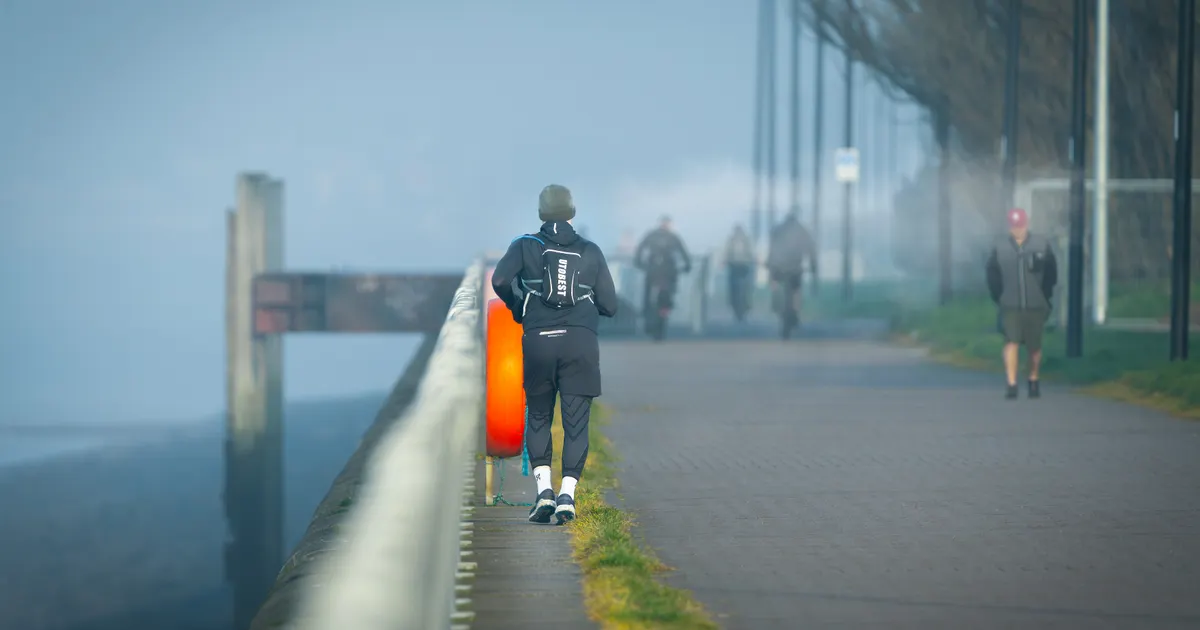
For a lot of office workers, winter means leaving home in the dark and coming back in the dark. A walk at lunchtime is often the only daylight you will see on a weekday. It also counts towards your activity for the day, it needs no kit, and it is much easier to say yes to at one o'clock than at six.
Vitamin D: the one winter supplement the NHS mentions
This won't fix your motivation, but it is worth knowing while we are on the subject of winter. Your body makes vitamin D from sunlight, and the NHS says most people can make all they need that way from about April to the end of September. For the rest of the year, the NHS puts it plainly: "Government advice is that everyone should consider taking a daily vitamin D supplement during the autumn and winter." Adults need 10 micrograms a day, and the NHS vitamin D page covers who should take it all year round.
That is about as far as I go on supplements. They are the last 5%. Sleep, food, daily movement and a plan you stick to come first.
When winter is more than low motivation
For some people, winter brings more than not fancying a run. Seasonal affective disorder, usually shortened to SAD, is low mood that follows the seasons, and the NHS advice is simple: see a GP if you think you might have it. If you are tired all the time as well, the post on being tired all the time goes through the common causes, and a blood test is often a sensible first step.
If you are finding it hard to cope, Samaritans are on 116 123, any time of day or night.
Frequently asked questions
Is it safe to exercise outside in the cold?
For most healthy adults, yes. Wear layers you can take off, give yourself a longer warm up than usual, and wear something bright if it is dark. If you have a heart or lung condition, check with your GP before training outdoors in cold weather.
Should I train in the morning or evening in winter?
Whichever slot you can fix and protect. Mornings are dark either way in winter, so there is no daylight to gain, but there are fewer things that can cancel them. If evenings work better for you, go straight from work so you never have to leave a warm house to do it.
How do I stop putting weight on over winter?
Aim to hold steady rather than lose. Keep your two sessions, keep walking, and keep an honest eye on the extras that creep in from November: the drinks, the work treats, the second mince pie. Arriving in January the same weight as October is a genuinely good result.
What is the minimum I should do to stay fit over winter?
The NHS asks adults to do strengthening activities on at least two days a week, plus regular moderate activity like brisk walking. Two short strength sessions and a daily walk will keep you ticking over until the evenings get lighter again.
DM me STARTING on Instagram @paulbutler.coach and I will send you The Starting Point: five days of the fundamentals, then a four week plan built round your real week. No cost, no catch.
If dark evenings are the problem, someone checking in on you every week makes skipping a lot harder. I coached in person in Southampton for 18 years and now coach fully online; online coaching is on the site with the prices. Rather just talk it through? Book a free 15-minute call.
This is general information, not medical advice. If low mood comes back every winter, speak to your GP. If you are struggling to cope, Samaritans can be reached on 116 123, 24 hours a day.
More honest guides on fat loss, nutrition and training
The 2007 Tucker and Gilliland review of season, weather and physical activity is linked in the text, along with the NHS guidance on vitamin D. Images from Pexels (free to use): Julia Larson, Mart Production, Karl Byron.
