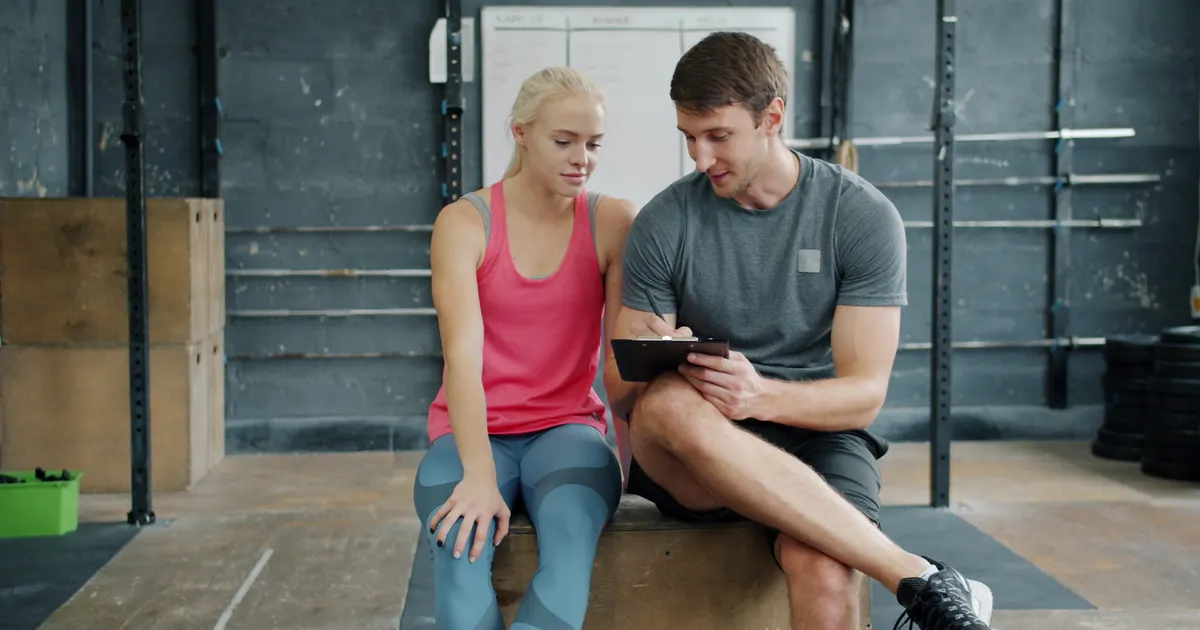
Fitness Assessment: What Happens in Your First Session
 By Paul Butler · Online Coach & Personal Trainer
The word "assessment" does a lot of damage. It sounds like an exam, and nobody turns up to an exam hoping to be themselves.
So here is the first thing to know about a fitness assessment: you cannot fail it. It is not a test of how fit you are, it is me finding out how you move, what has hurt before and what your week actually looks like, so the plan I write is yours rather than somebody else's. This is exactly what happens in a first session, in order, and how long each bit takes.
What happens in a fitness assessment?
Four things, in this order. A conversation about what you want and what your health is doing. A movement check, which is bodyweight squats and the like. A short workout so you leave having actually trained. Then ten minutes on what the plan is and when you are coming back.
| Part | Roughly how long | What actually happens | What it is for |
|---|---|---|---|
| The conversation | 15 minutes | Goals, training history, injuries, medication, job, sleep, stress, what got in the way last time | So the plan fits your week, and so I know what to avoid |
| Movement check | 10 minutes | Bodyweight squat, a hinge, an overhead reach, a push, balance. No weight on anything | To see how you move before I load it |
| A light session | 25 minutes | A handful of exercises at a weight you could do more of. Technique first | So you know what training with me feels like |
| The plan | 10 minutes | How often, what we are tracking, what happens between sessions | So you leave knowing the next three weeks, not just the next hour |
You will not be crushed. If you leave a first session unable to walk down stairs, that was for the trainer's benefit, not yours.
Why the boring questions matter

The first fifteen minutes feel like paperwork and they are the most valuable part of the hour. It is also not optional. The UK professional standard for personal trainers is quite specific about what a trainer has to do before they programme anything for you.
"Collect the information required to design, tailor and coach an effective exercise programme. Obtain informed consent. Conduct pre-exercise assessment screening to assess if client onward referral is advised and where necessary refer the client to a more appropriate professional."
Read the last clause again, because it is the useful one. Part of my job is knowing when the answer is not me. If something in that conversation belongs with your GP or a physiotherapist, I will say so, and it is better for both of us that it comes out in the first hour rather than the sixth week.
If a trainer skips this bit entirely and goes straight to the weights, that tells you something. Not necessarily something terrible. But something.
The bit everyone is actually worried about
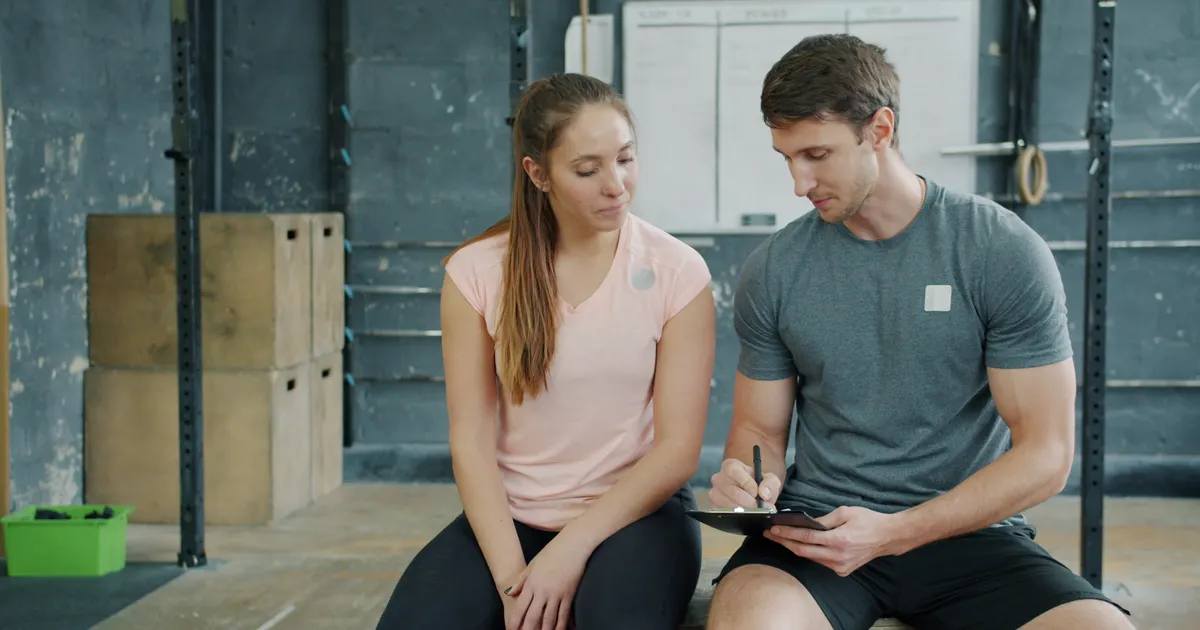
Nobody messages me worried about the squat. They are worried about being the least fit person in the room while somebody young and cheerful writes things on a clipboard.
So, plainly. The movement check has no numbers in it. There is no score, no percentile, nothing gets compared to anybody. I am watching for where you are stiff and where you are strong, and "stiff" is the normal state of a human being who sits down for a living. I have got Cystic Fibrosis, so breathing is already a part-time job for me. I am not in a position to be smug about anyone's fitness.
And the honest bit: everyone is worse at this than they expect to be, including people who used to be athletes, and it changes fast. First sessions are the easiest part of the whole thing to improve on.
If the room itself is the problem rather than the session, walking in like you belong deals with that properly.
What to bring, and what to say
- Trainers you can actually move in. Running shoes are fine. Anything flat is better for lifting.
- Water. That is genuinely the kit list.
- The truth about your week. If you can do two sessions, say two. A plan built on four sessions you will not do is worth nothing.
- Every injury, including the old ones. The shoulder from ten years ago counts. So does the back thing you have stopped mentioning.
- What went wrong last time. This is the most useful sentence you can give me, and the one people leave out because it feels like an admission. It is not. It is the design brief.
When a first session is not the right next step
If you have a condition your GP is managing, or you are recovering from something, get their view before you book anything. A good trainer works alongside that, not around it. This is general information, not medical advice.
And if money is tight and you are not sure yet, do not buy a session to find out whether you like training. Start on your own with something small, see whether it holds for a month, then spend. A four week beginner programme costs nothing and answers the question honestly.
Frequently asked questions
Do I need to be fit before my first personal training session?
No, and that is not me being polite. The session is built round wherever you are, and the movement check exists precisely so I do not guess. Getting fit first would be like tidying up before the cleaner comes.
How long does a fitness assessment take?
About an hour in total. Some trainers split it, doing a consultation first and training in a second session. Either works. What matters is that the conversation happens before anything heavy does.
Will I be weighed or have my body fat measured?
Only if you want to be. Some people find the numbers useful, some find them a reason to quit in week three. I would rather take a waist measurement and a photo, and if we do use a machine, the number it gives you needs reading carefully.
Will I be sore the next day?
A bit, probably, for the first couple of weeks of training in general. After a well judged first session you should feel like you did something, not like you have been in a car accident. Soreness is not the measure of a good session.
Rather just talk it through first? Book a free 15-minute call. Nothing gets sold on it, and you can ask all the questions you would rather not ask in a gym.
If you are in Southampton and want to see how it works, face to face coaching at JD Gyms Bitterne is on the site with the prices. Or DM me STARTING on Instagram @paulbutler.coach and I will send you The Starting Point: five days of the fundamentals, then a four week plan built round your real week. No cost, no catch.
This article is general information, not medical advice. If you have an injury, a heart condition or anything your GP is currently managing, talk to them before booking a first session.
More honest guides on fat loss, nutrition and training
The screening requirement is quoted verbatim from the CIMSPA Professional Standard: Personal Trainer (skill S4.1), the UK professional body for the sport and physical activity sector, linked in the text. Images from Pexels (free to use): silverkblack.
