How Much Is a Personal Trainer? The Honest UK Answer
 By Paul Butler · Online Coach & Personal Trainer
Most people ask this one with one eye shut, the way you check the bill after a meal out you enjoyed a bit too much.
So here is the answer first, before the part where the fitness industry starts talking about investing in yourself. How much is a personal trainer in the UK? Somewhere between £25 and £70 an hour face to face, and roughly £80 to £250 a month for online coaching. Weights and measures, basically.
That is a wide range. It is also the honest one, and the reason it is that wide is the genuinely useful part of this article.
So how much is a personal trainer in the UK?
The honest answer is that it depends on three things: where you are, what is actually included, and who is standing next to you. London sits above everywhere else, sometimes well above. The table lays out what the UK price guides say against what I actually charge, and the rest of this explains why the gap is that wide.
| What you are buying | What the UK price guides say | What I charge |
|---|---|---|
| One hour, one to one, in a gym | £25 to £70 an hour | £50 an hour at JD Gyms Bitterne |
| Half an hour, one to one | £20 to £40 | £30 |
| Small group training | £15 to £30 each | £20 each |
| Online coaching, billed monthly | £80 to £250 a month | £99 to £299 a month |
Those middle column figures come from the three UK price guides currently ranking for this question, all linked at the foot of the page. Worth knowing before you lean on them: not one of them cites a survey. There is no national database of what trainers charge. They are market observation, and so is mine.
Why the range is so wide
Where you are
This is the biggest single factor and it is nothing to do with the trainer. London is its own economy. The rest of the country sits considerably below it, and a trainer in a smaller city is often charging half what the same person would charge in zone two.
What is actually included
Two trainers can quote you the same hourly rate and be selling completely different things. One is selling the hour. You turn up, they count, you leave, and what happens over the other six days is your problem.
The other is selling the hour plus the plan around it: a written programme, food targets, a check in when you have gone quiet, and someone to change things when your week falls apart. That second version costs more to deliver, because it takes more of the trainer's week.
So the only sensible way to compare two prices is to ask what happens between sessions. If the answer is nothing, you are comparing an hour to a service, and the hour will always look cheaper.
Who is standing next to you
Qualifications vary more than most people realise, and so does what they cover. I am a qualified personal trainer, a qualified nutritionist and a qualified life coach, which in practice means training, food and the habits underneath all get sorted in one conversation rather than three. That is the honest reason some trainers cost more than others, and it is worth asking about rather than guessing.
What are you actually paying for?
The obvious answer is an hour of someone's time. The more accurate answer is that you are paying for the decisions: what you lift, how heavy, when it goes up, and what happens the week you do not fancy it.
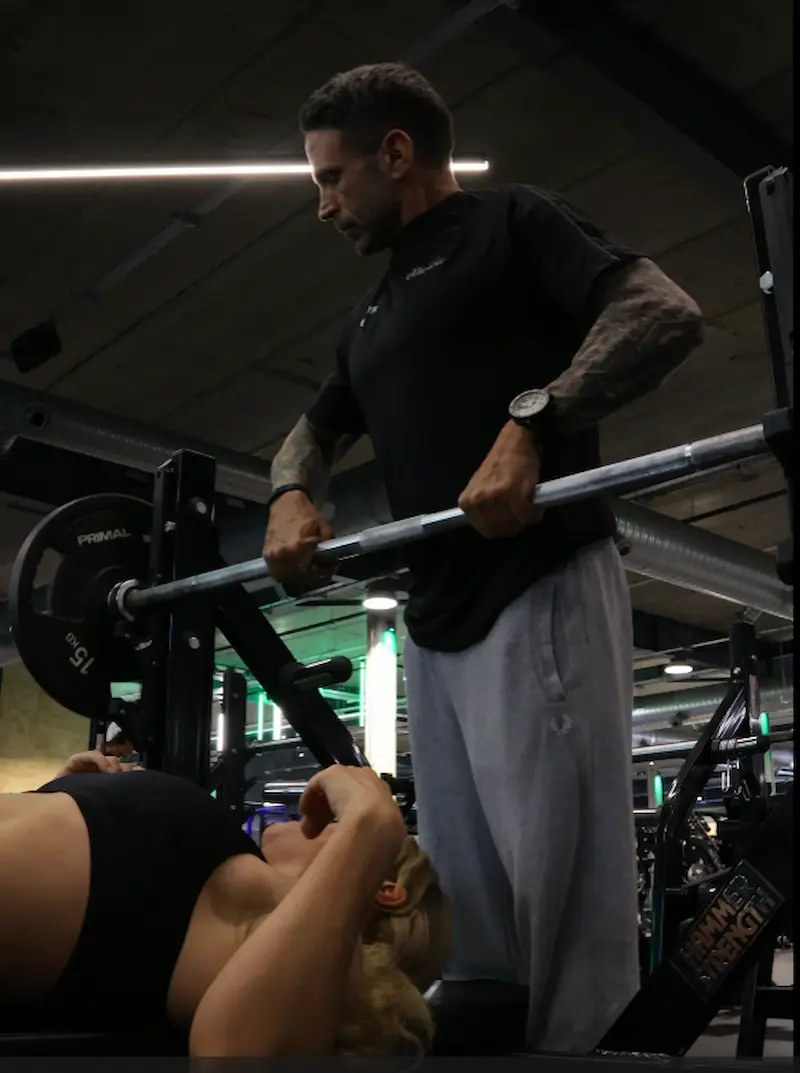
There is a small but neat study on exactly this. Twenty moderately trained men ran the same twelve week programme. Half were supervised by a trainer, half were left to it. The supervised group put weight on the bar faster and finished stronger.
"...a greater rate of training load increase and magnitude which resulted in greater maximal strength gains compared with unsupervised training."
Twenty young men on an identical programme is a small study, and you are probably neither twenty nor training identically. So do not take it as proof of anything about you. Take it as a pointer at the thing I watch happen every week: left alone, almost everyone picks a weight they already know they can finish.
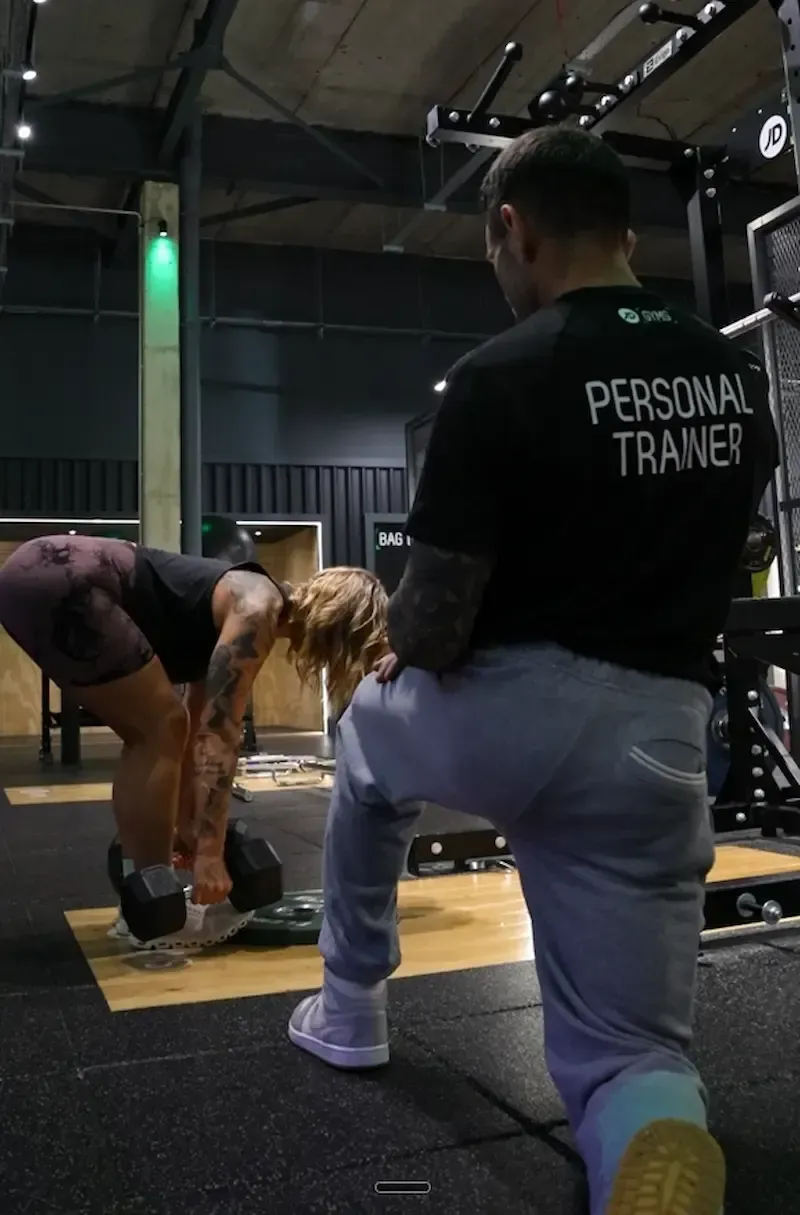
I do around twenty five hours of face to face sessions a week alongside the online side. Being in the room that often is where "get your house in order" came from. I have watched the same pattern dozens of times, and it is never a knowledge problem. People buy the advanced thing before sleep, food and steps are handled, and then wonder why it did not stick.
What I charge, and why it is on the website
Face to face in Southampton it is £50 an hour, at JD Gyms Bitterne. Half an hour is £30, and small group sessions are £20 a head. That is the full picture: no joining fee, no block you have to buy up front. More detail sits on the Southampton personal training page.
Online it runs from £99 a month for Lite, £149 for Premium and £299 for one to one Elite. What separates them is how much of me you get between sessions, which is the thing that actually costs money. The packages are laid out on the homepage. No contracts.
I put the numbers on the website because I would want to know before picking up the phone. If you have to book a call to find out a price, that is information too.
The problem with a lot of online coaching
Online coaching is cheaper than face to face, and sometimes the reason is a good one: you do the sessions yourself, so the coach's time goes further. Sometimes the reason is less good. Nobody behind it has ever coached a person in a room.
Plenty of online coaches have never trained anyone face to face. Some have no qualification at all. The path is well worn: do a competition prep, get a physique, sometimes with chemical help that never makes it into the caption, then sell "support" off the back of the photos. What they are selling is a look, not experience. They have never watched a beginner's knees cave on a squat, or worked out why someone's shoulder hurts on a press, or seen what a bad month looks like on a real person rather than a spreadsheet.
I have over ten thousand hours on the gym floor coaching clients face to face, and that is where every bit of my online coaching comes from. So when you are comparing two monthly prices, ask two questions before you look at the number. Have you coached people in person, and for how long? And what exactly are you qualified in? If either answer is thin, the cheaper price is not cheaper. It is just less.
When a personal trainer is a waste of money
Fair warning, this section costs me work.
If you are not going to turn up, do not buy the sessions. A trainer cannot make you attend, and prepaying for twelve sessions has never once made anyone attend the ninth. That is the single most common way people waste money in this industry, and it is not the trainer's fault.
If you are sleeping five hours, walking two thousand steps and eating whatever turns up, an hour a week with me will not out-run that. Get the boring things in order first. It costs nothing and it is most of the result. If that is where you are, this piece on why people keep starting over is more use to you than my price list.
And if what is actually stopping you is walking through the door rather than the money, that is a different problem with a different fix. Walking in like you belong covers it properly.
How to work out what you can actually afford
Pick the monthly number first, then choose the format that fits inside it. Almost everybody does this backwards: they decide they want two sessions a week, discover it is £400 a month, and then buy nothing at all.
A few things worth knowing before you spend anything.
- One session a week beats two a fortnight. Consistency does the work, and a fortnightly gap is long enough to lose the thread entirely.
- Blocks are usually cheaper. The guides put the discount at around 10 to 20%. Ask whether the block expires before you buy one.
- Online is cheaper for a reason. You do the sessions on your own. It works brilliantly if you will actually do them, and it is money on fire if you will not. Be honest with yourself about which you are.
- Ask what happens between sessions. Then compare the two prices again. They often stop looking similar.
Frequently asked questions
Is a personal trainer cheaper if I buy a block of sessions?
Usually, yes. The UK price guides put block discounts at roughly 10 to 20% against paying session by session. The thing to check is the expiry date, because a ten session block that runs out in eight weeks is not a discount if you are away for two of them.
How much is a personal trainer at a big gym chain like PureGym?
Trainers in the large chains are generally self employed and set their own rates, so the name above the door does not fix the price. Two trainers on the same gym floor can charge quite different amounts. Ask the trainer directly rather than asking at reception.
Does the price usually include a nutrition plan?
Often not, and it is the most common gap between what people assume they are buying and what they get. Some trainers are not qualified to write one, which is entirely legitimate. Ask before you commit, and ask who writes it.
How many sessions a week do I actually need to make it worth it?
For most people starting out, one a week is enough, provided you train once or twice on your own between them. The session is where technique gets fixed and the weight goes up. The other days are where the work happens.
That depends on how often you would train and whether you want me in the room or in your pocket. Rather just talk it through? Book a free 15-minute call. Nothing gets sold on it, and if the answer is that you are better off on your own for now, I will say so.
Not ready to talk to anyone yet? DM me STARTING on Instagram @paulbutler.coach and I will send you The Starting Point: five days of the fundamentals, then a four week plan built round your real week. No cost, no catch.
More honest guides on fat loss, nutrition and training
Price ranges compiled from the UK guides currently ranking for this question: OriGym, MatchMyTrainer and GymGuide. None of them cite a survey, and neither do I: there is no national record of what UK trainers charge. My own prices are the ones I actually charge; the hourly and online rates are also on the site. The supervision study is Mazzetti et al. 2000, Medicine & Science in Sports & Exercise, linked in the text. Photographs are my own, from real sessions with clients.
